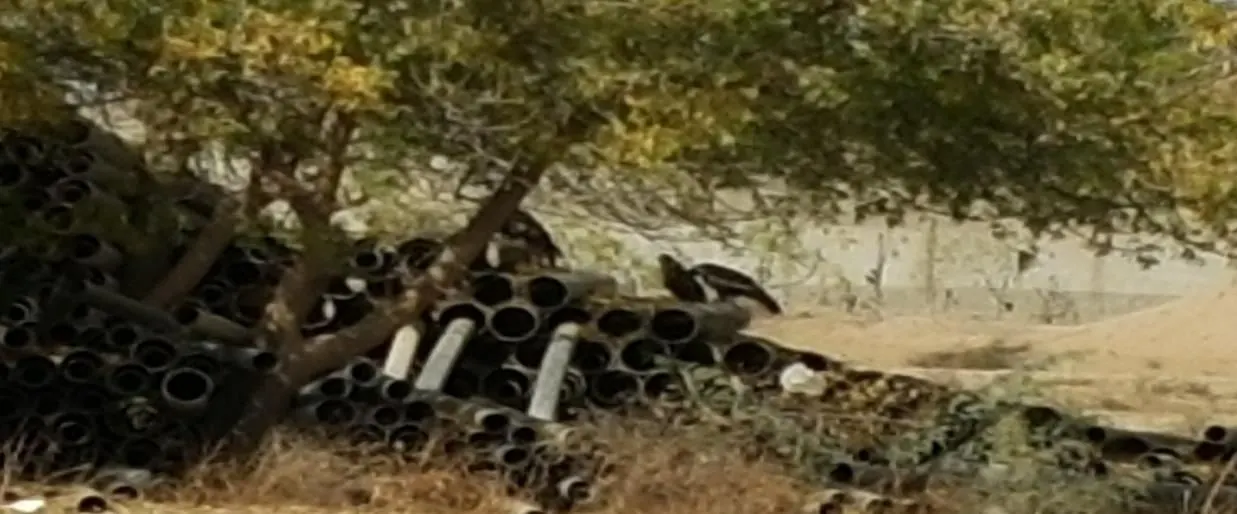
Golf course roost, Runway 25R
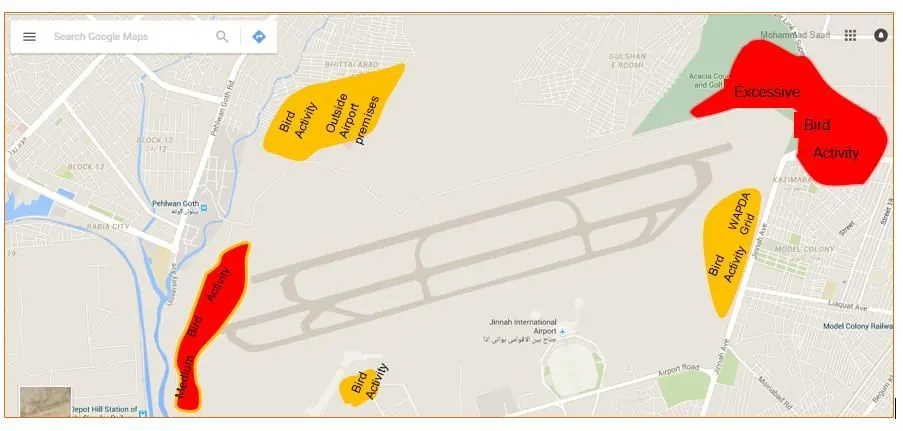
Hundreds of kites roost on the golf course beside the 25R approach. The abattoir in Malir Cantonment and nesting at the WAPDA grid station near 25L add to the activity.
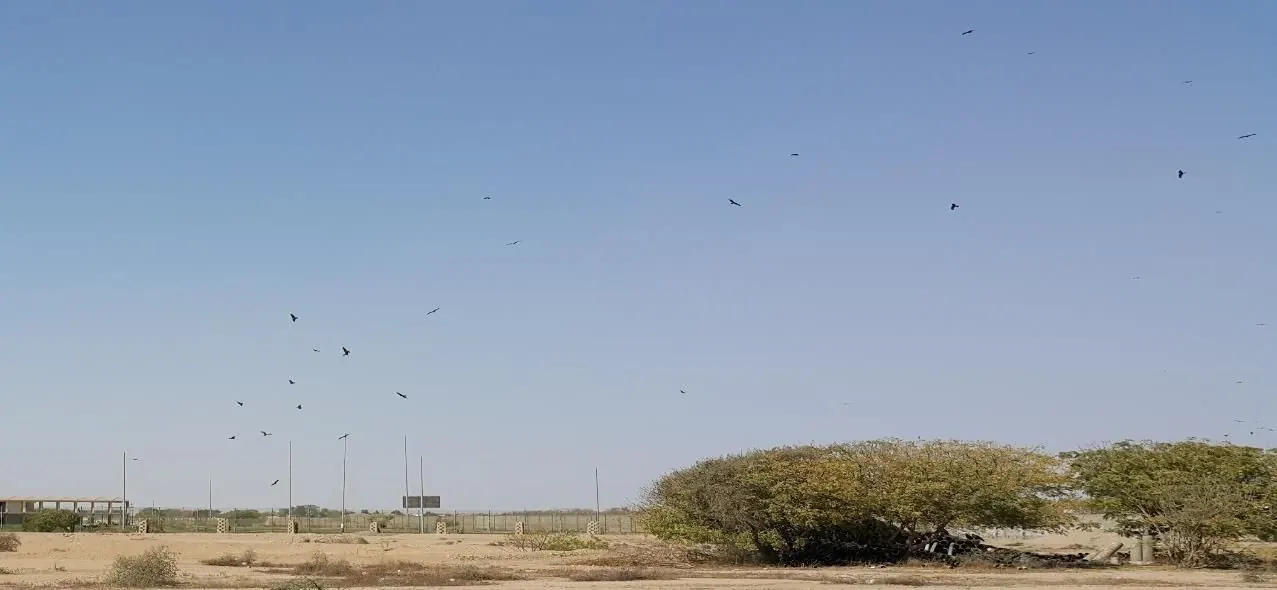
CAA Pakistan asked MSM Tempus to study the bird hazard at JIAP and recommend the most cost-effective products and techniques to reduce it.
The hazard at JIAP was assessed as large-scale, with the heaviest activity from the approach funnel to the touchdown point at the Runway 25 end.
| Area | Species |
|---|---|
| Runway 25 L & R | Kites, crows, hawks |
| Runway 07 L & R | Kites, crows, hawks, pigeons |
| North side, along the runway | Hawks, kites |
| Buildings, structures, bridges | Pigeons, mynas, crows |
| Beyond the airside | Kites, crows |
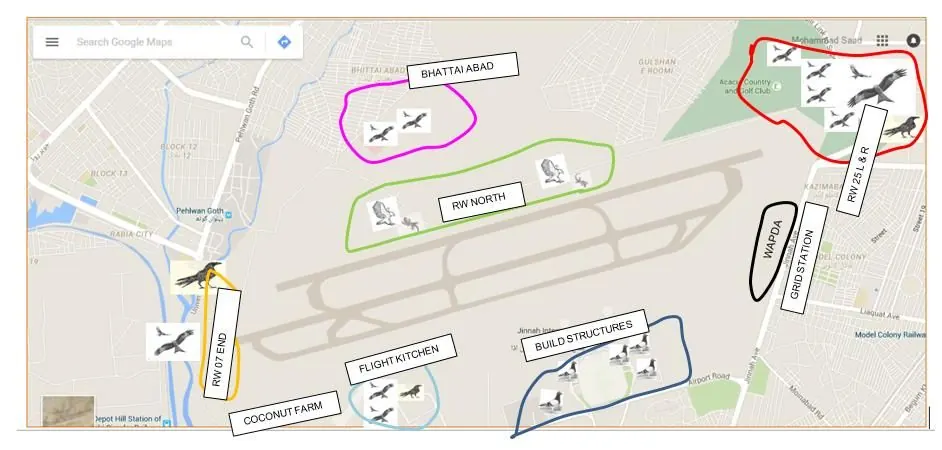
Hundreds of kites roost on the golf course beside the 25R approach. The abattoir in Malir Cantonment and nesting at the WAPDA grid station near 25L add to the activity.

Household garbage and food-carrying plastic bags blow against the western fence and draw crows, sparrows, pigeons and kites.
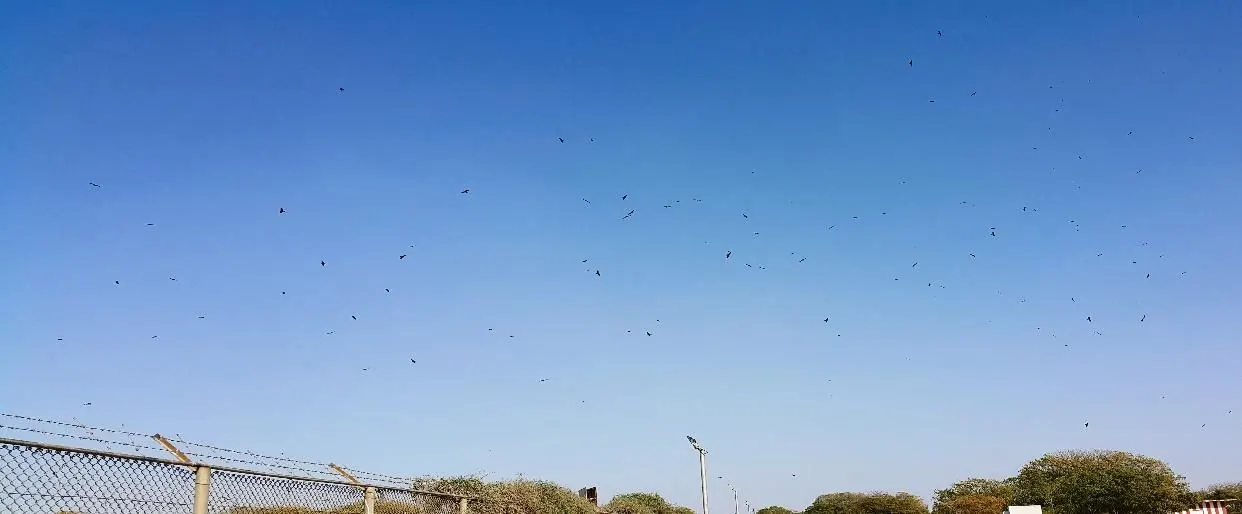
Hawks hover and dive on lizards brought out by the heat. The leftovers attract kites, crows and scavengers onto the runway.
Hangars, sheds, bridges and warehouses also house pigeons, sparrows and mynas, which fly in flocks around parked aircraft and equipment. The coconut farm behind the Ispahani hangar is a further kite breeding ground.
Habituation was the main concern, so the plan pairs habitat modification with active deterrents.
Remove the root causes: eco-friendly measures to end kite roosting at the golf course, proper waste disposal at the Malir Cantonment abattoir, and moving birds out of the WAPDA grid station to clear the 25L approach.
Insecticide spraying along the runway to remove the insects that feed lizards, and in turn the hawks and kites.
Eco-friendly chemicals on roosting and nesting sites at the golf course, trees and shrubs, with continued use so birds do not return.
Regular use on activity areas around the Runway 25/07 ends and Bhittiabad to move birds out permanently.
Fixed cannons at marked positions, around 146 dB covering about 60,000 m² each, operated remotely so they fire only when needed, plus a vehicle-mounted cannon dispatched in coordination with ATC.
Aviation-grade launchers for birds in the approach funnel on short final, 200 to 800 ft up. The silent rocket motor gives surprise.
Along the perimeter fence, on runway-side structures such as the DVOR where birds perch, and on building edges.
The study concluded that the recommended products and equipment would substantially deter birds from the airfield, remain safe for aircraft and for people living nearby, and that the cannons would stay a key deterrent until birds finally moved away from JIAP.
Most of these techniques apply to other airports in Pakistan, including Lahore and Islamabad, each with its own species mix.