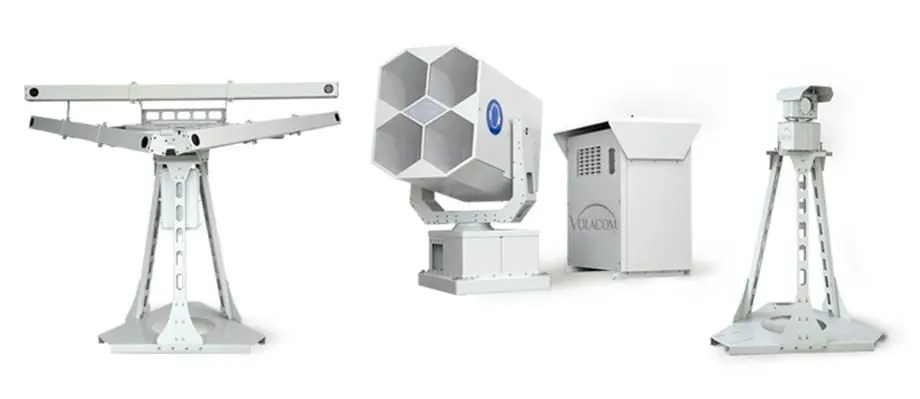
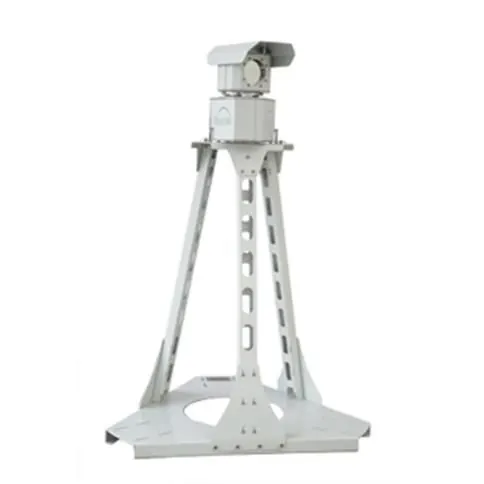
Stereo camera
- Monitoring and reporting
- Bird recognition
- Habitat management
- Software for specialised reporting

Larger, faster and quieter turbofan aircraft and rising traffic raise the risk of serious bird strikes. We supply layered, non-lethal deterrence matched to each airport’s species and habitat.
Birds come to an airfield for food, water, shelter and roosting, and each species has its own habits and seasons. Pakistan has an obligation under ICAO Doc 9137, Part 3 (Bird Control and Reduction) to discourage hazardous birds on and around its airports.
Habituation is the main enemy. Long-term results come from habitat modification combined with deterrents birds do not get used to.

Close-range devices protect fixed zones; lasers and pyrotechnics reach birds over the approach and far end of the runway.
Distance from the device, logarithmic scale. Figures from manufacturer literature.
Interconnected modules that detect, recognise, monitor and log birds, then deter them with a focused sound signal.

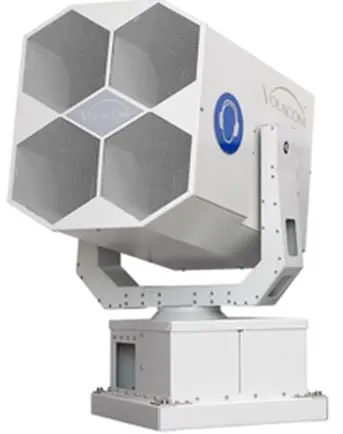
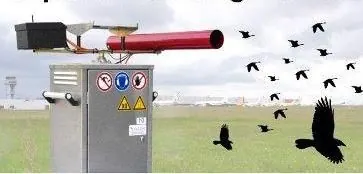
Several very loud bangs scare birds away from the area around the unit. Operated by radio remote so they fire only when needed, keeping nights quiet. A vehicle-mounted cannon can respond wherever birds gather, in coordination with ATC.
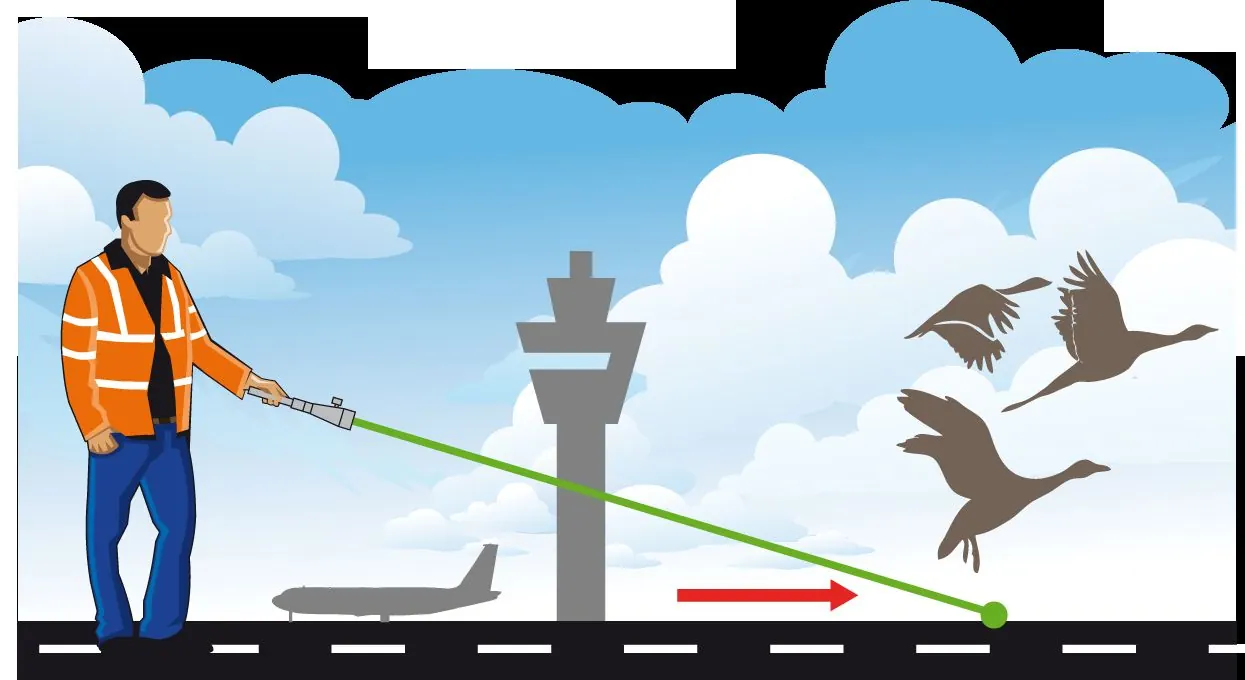
Birds see the approaching beam as a physical danger and fly away, the same reflex as when a car approaches. Unlike conventional methods, birds do not get used to it. Automated systems claim the territory 24 hours a day, 7 days a week.
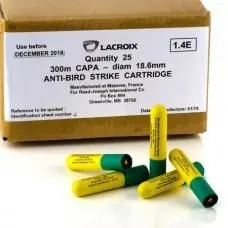
Fired from a hand-held aviation-grade launcher. The rocket motor is silent on discharge, so the cartridge reaches its detonation range undetected and the bang comes as a surprise. Suited to the approach funnel and birds flying 200 to 800 ft up.

Food-grade products sprayed onto surfaces with a pump sprayer to make roosting and feeding areas unattractive. They can be sprayed onto nests, structures and tree branches and do not harm the environment, vegetation or people.

Birds avoid landing on spikes, which makes them very effective on linear surfaces: runway marking boards, fences, DVOR structures and building edges where birds perch, roost and nest.
A patented optical design produces a green beam optimised for repelling birds over long distances, with a built-in system that stops the user shining it at aircraft.
Ten modes: −30°, −20°, −10°, −5°, 0°, +5°, +10°, +20°, +30° and off. Each limits how far above horizontal the beam can be shone, preventing it reaching aircraft, pilots and passengers.
Most effective at sunrise, sunset and in overcast, rainy or foggy weather. Never point at people, vehicles, buildings, aircraft or reflective surfaces.
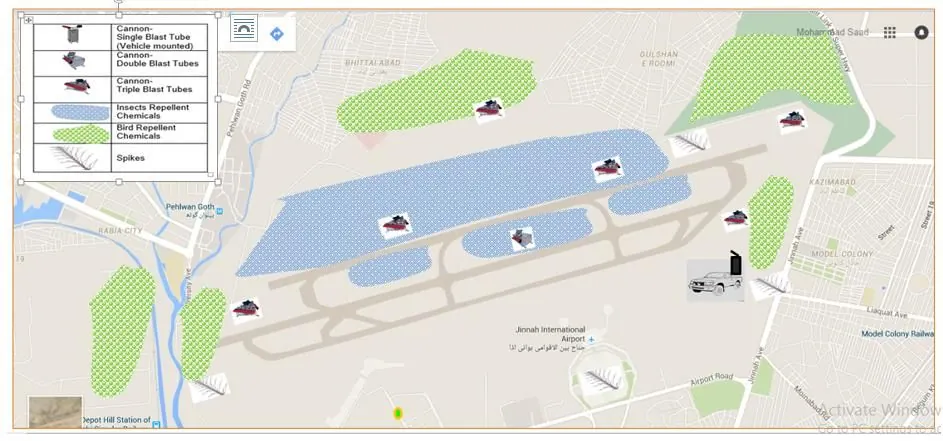
Our 2016 study mapped bird hotspots around Jinnah International Airport and set out where each deterrent should go.